
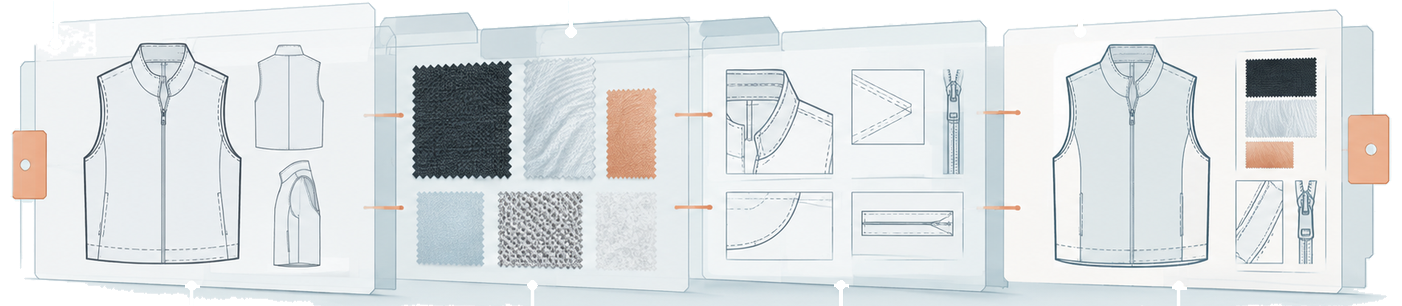
A garment’s story does not end when it leaves the factory. Its materials, manufacturing history, care needs, repair options, resale potential, and recycling route all matter throughout its lifecycle. A digital product passport can connect that information to the product, giving approved users a clearer view of what they are buying, making, selling, repairing, or processing. For fashion brands, this creates both an opportunity and a practical challenge. Product data must remain accurate across design, sourcing, manufacturing, inventory, retail, and end-of-life operations. With the right systems and supplier processes, DPP preparation can support compliance while helping reduce waste and improve product transparency.
Key Takeaways
- Build a complete product record: Connect materials, suppliers, manufacturing, compliance, care, repair, and recycling information to each product, batch, or model.
- Strengthen data and supplier workflows: Audit PLM, ERP, WMS, sourcing, and factory records, standardize key terms, assign data owners, and address gaps across supply-chain tiers.
- Prepare for flexible, role-based access: Use persistent identifiers, connected systems, permissions, and audit trails so consumers, partners, recyclers, and authorities can access the information relevant to them.
What Is a Digital Product Passport (DPP)?
A Digital Product Passport (DPP) is a structured digital record that connects a physical product with information about its materials, production, use, and end-of-life. Under the EU’s Digital Product Passport framework, the system is intended to make product information easier to access, verify, and share across the supply chain.
For fashion brands, a DPP may bring together a product’s identity, fiber composition, manufacturing details, compliance records, care instructions, repair guidance, and recycling information. The record can serve different users throughout the product lifecycle, including designers, suppliers, manufacturers, consumers, repairers, recyclers, customs officials, and regulators.
A DPP does not mean that every user sees every piece of information. Access can depend on a person’s role, the type of data, and the rules that apply to the product. This makes the passport both a transparency tool and a controlled information system.
Definition, purpose, and role in transparency
The simplest way to think about a DPP is as a digital product file that follows an item through its lifecycle. It can contain information about a product’s identity, legal compliance, safety, materials, environmental performance, durability, repair, reuse, recycling, and disposal.
For a fashion brand, the record may begin during design and product development. Teams can document the intended fiber blend, trims, finishes, care requirements, and target specifications. Sourcing and production teams can then add supplier, facility, origin, and manufacturing details as the product moves through the supply chain.
The European Commission’s DPP overview describes the passport as a shared digital system connecting physical products with lifecycle data. That connection can help brands respond to compliance requests, substantiate material claims, and provide clearer information at the point of sale.
Transparency does not require a brand to reveal confidential pricing or proprietary construction details. It means giving each approved user accurate information that is relevant to their role.
Unique identifiers, data carriers, and access permissions
Each DPP needs a unique product identifier that connects the physical item to its digital record. Depending on the product and applicable technical requirements, the identifier may be represented by a QR code, NFC tag, RFID label, or another approved data carrier. A garment could display it on a hangtag, care label, packaging, or another accessible part of the product.
The data carrier is only the way a person reaches the record. It is not the passport itself. The underlying record needs secure, persistent, and interoperable data management so the information can remain accurate and available over time. DPP guidance from Inriver explains how unique identifiers and role-based access connect products with different types of users.
Access permissions matter because a consumer does not need the same information as a recycler or customs authority. A shopper might see fiber content, care instructions, manufacturing information, and repair options. A recycling facility may need details about blends, dyes, coatings, trims, and other components. A regulator may require compliance evidence that is not displayed publicly.
For brands, this means defining who can view, add, verify, or update each category of product data.
DPPs vs. QR codes, care labels, and certifications
A QR code is a data carrier, not a Digital Product Passport. It provides a way to open a digital record, but it does not define what information the record contains or how that information is managed. A static webpage or PDF may provide useful product details, but it may not satisfy the technical requirements of a DPP.
A care label serves a narrower purpose. It tells customers how to wash, dry, iron, or otherwise care for a product. A DPP may include those instructions, but it can also connect them with material composition, production data, repair guidance, and end-of-life information.
Certifications are different again. A certification confirms that a product, material, facility, or process meets a particular standard. A DPP can store related information, such as a certificate number, issuer, scope, or validity period, but the passport is not itself a certification.
This distinction matters because a QR code, digital care label, or sustainability badge is not automatically a complete DPP. A functional passport requires structured information, a product identifier, suitable data storage, access controls, and reliable record maintenance. Technical DPP guidance explains these differences in more detail.
Why DPPs matter for fashion and textile supply chains
Fashion products often involve many materials, suppliers, facilities, and production stages. A single garment may use fibers from one source, yarn from another, fabric processed at a separate facility, and cut-and-sew production elsewhere. Information can become inconsistent or disappear as it moves between spreadsheets, software systems, and business partners.
A DPP creates a digital connection between those stages. It can help brands organize product and supplier information, trace materials through production, and support environmental or social claims with relevant evidence. It can also give manufacturers, retailers, consumers, and recyclers more useful information about the items they handle.
The value continues after a product is sold. Customers may use the passport to find care guidance, repair services, resale information, or take-back options. Repairers and resellers can review product details to assess condition and compatibility. Recyclers may need accurate information about fibers, blends, trims, coatings, and other components before sorting or processing an item.
This supports circular business models while helping brands respond to compliance and transparency expectations. The EU’s overview of DPP sustainability goals highlights its role in repair, reuse, recycling, and responsible disposal. For fashion businesses, preparation starts with treating product information as a connected business asset, rather than data held separately by design, sourcing, manufacturing, and retail teams.
What Information Does a Digital Product Passport Include?
A Digital Product Passport (DPP) brings product, supply chain, environmental, and compliance information into one structured digital record. For a fashion product, that record may connect a style number with its fiber composition, material origins, manufacturing facilities, environmental impact, care instructions, repair options, and end-of-life guidance.
The exact information required will depend on the product category and the rules that apply to it. Product-specific legislation may define which fields brands must provide, how long the information must remain available, and who can access each part of the record. The European Commission’s Digital Product Passport guidance explains that access may vary between consumers, businesses, repairers, recyclers, and public authorities.
For fashion brands, preparing this information means more than placing a QR code on a garment label. Teams need reliable product and supply chain data behind the data carrier. That requires consistent identifiers, connected systems, clear supplier requirements, and processes for checking information before it reaches the passport.
Product, manufacturer, importer, and facility identifiers
A DPP begins with identifiers that connect the digital record to a specific product. Depending on the product and applicable rules, this may include a product name, style number, model number, batch number, lot number, or individual serial number. The identifier should match the information used across product development, sourcing, manufacturing, warehousing, and sales systems.
The passport may also identify the manufacturer, importer, responsible economic operator, and facilities involved in production. For a fashion product, this could include the brand owner, fiber producer, yarn spinner, fabric mill, dyeing facility, cut-and-sew factory, finishing site, and distribution center.
Clear identifiers help prevent errors when several suppliers produce similar styles or when a garment passes through multiple production stages. They also make it easier to connect a finished item with the correct technical documents, material records, and production history. The EU Digital Product Passport overview provides additional context on product, operator, and facility identification.
Fiber, materials, origin, and recycled content
Material information is central to a fashion DPP. It may include a garment’s fiber composition, fabric construction, trims, coatings, dyes, finishes, labels, fasteners, packaging, and other components. Brands may also need to identify whether materials are virgin, recycled, reused, organic, bio-based, or sourced through a certified process.
Origin data can extend beyond the country shown on a product label. It may identify where fibers were produced, yarn was spun, fabric was woven or knitted, and finishing or assembly took place. Recycled content claims should connect to supporting evidence, such as supplier declarations, transaction records, mass-balance documents, or certification records.
A structured material library helps teams use consistent names, percentages, and classifications across collections. It also reduces the risk of describing the same material differently in product, sourcing, and compliance systems. This creates a stronger foundation for material and origin data when the passport is created.
Supplier, production, facility, and chain-of-custody data
A DPP can show how a product moved through the supply chain, from raw material sourcing to finished-goods production. Relevant records may include supplier identities, facility locations, production steps, processing dates, quantities, certifications, and the relationship between input materials and finished products.
Chain-of-custody information matters when a brand makes claims about recycled, organic, certified, or responsibly sourced materials. The records should help demonstrate that the material used in a particular product came from the stated source and remained identifiable through the relevant production stages.
Suppliers may also need to provide information about emissions, chemicals, processing methods, and environmental performance. Brands can improve data quality by defining required fields, assigning data owners, setting submission deadlines, and validating supplier information before it enters the product record. Connected product and manufacturing systems can help keep these records associated with the correct style, batch, and facility.
Environmental impact, resource use, and restricted substances
Environmental information may cover a product’s carbon footprint, water use, energy consumption, waste generation, and other resource impacts. Depending on the applicable product rules, a DPP may also reference lifecycle assessment data or explain how environmental figures were calculated.
Brands may need to record substances of concern, hazardous chemicals, restricted substances, and the controls used to manage them. This information can come from material suppliers, chemical inventories, laboratory tests, and manufacturing records. Each record should be linked to the correct material, facility, and product version, since a change in dye, coating, or finish can affect the product’s compliance profile.
Environmental figures and material claims should be supported by evidence rather than estimates without a clear basis. Guidance on DPP environmental and compliance information describes the types of impact and restricted-substance data that may form part of a passport.
Durability, care, repair, resale, reuse, and recycling data
A useful DPP supports the product after its initial sale. It may include durability information, expected use, washing instructions, repair guidance, spare-parts availability, and instructions for replacing or maintaining components. For products with removable trims or mixed materials, it may also explain how to disassemble them safely.
Circularity information can help repairers, resale platforms, recyclers, and consumers make better decisions. A passport might identify suitable repair services, explain whether a garment can be resold or reused, and provide sorting or recycling instructions. It may also record repairs, refurbishment, ownership changes, or other reuse events where the relevant systems support those updates.
This information gives consumers more practical guidance than a traditional care label alone. It can also help brands develop repair, take-back, resale, and refurbishment services. To remain useful, care and end-of-life guidance should reflect the garment’s actual fiber composition, construction, trims, and finishes.
Safety, conformity, and compliance records
A DPP may connect a product to the evidence used to demonstrate safety and legal conformity. Depending on the product, this can include declarations of conformity, risk assessments, technical files, test reports, safety data sheets, and records relating to restricted substances or product performance.
For fashion products, supporting records could include fabric test results, colorfastness reports, flammability testing, chemical compliance documents, and supplier declarations. These documents should be linked to the correct style, material, batch, or production site.
Brands should also track document versions, approval dates, and expiry dates. An outdated test report may not support a later material or manufacturing change. Organizing evidence in a connected product information system makes it easier to respond to requests from authorities, retail partners, and other authorized users. It also gives product teams a clearer view of which records need review when specifications change.
Public, consumer, business, and authority access
Not everyone who accesses a DPP will see the same information. Access is likely to depend on the user’s role, the product category, and the rules governing each data type. A consumer may see fiber content, care instructions, origin details, durability information, and recycling guidance.
A repairer may need construction details, component information, or spare-parts data. A recycler may require a more detailed material composition and disassembly instructions. Business partners and authorities may need access to supplier information, production evidence, conformity documents, or environmental records.
Confidential information should remain protected through permissions, authentication, and carefully defined data fields. Brands should separate information intended for public access from commercially sensitive data, such as supplier pricing, proprietary processes, or confidential manufacturing details. The European Commission’s DPP information provides further context on access for different user groups.
Product-specific rules and required data fields
There is no single list of DPP fields that applies to every product. Product-specific rules are expected to define what data businesses must collect, who must provide it, how long it must remain available, and which users can access it.
For fashion brands, this means preparation should begin with a flexible data structure rather than a fixed checklist. Core fields may cover product identifiers, materials, suppliers, facilities, production stages, environmental impact, care, repair, and end of life. Brands can then add fields required for a specific product category, claim, market, or legal measure.
The information should also be machine-readable, traceable to its source, and easy to update when a product specification changes. Supplier records, test documents, and environmental calculations need clear links to the relevant product or material version. As DPP requirements can vary by product group, brands should review official EU guidance and sector updates before treating any field as final.
How Does a Digital Product Passport Work Across the Product Lifecycle?
A Digital Product Passport (DPP) is not created once and left unchanged. It develops alongside a product, collecting verified information from design, sourcing, manufacturing, distribution, use, repair, and end-of-life processing. The passport links this information to a specific product, batch, or model through a persistent digital identity.
For fashion brands, this means connecting information that often sits in separate systems. Material specifications may live in a product lifecycle management platform, supplier details in spreadsheets, production records in factory software, and inventory data in an ERP or warehouse management system. A DPP brings the relevant information together so authorized users can access a consistent product record.
The exact data requirements depend on the applicable EU rules and product category. However, the general process follows the product lifecycle, from initial material selection through recycling. The European Commission’s information on the Ecodesign for Sustainable Products Regulation explains how product information can support sustainability, circularity, and informed decisions across the value chain.
For a DPP to remain useful, each participant must contribute accurate information at the right stage. Brands need processes for collecting, checking, updating, and sharing data, rather than treating the passport as a separate compliance file. This lifecycle approach also helps connect design decisions with manufacturing, inventory, customer service, resale, and end-of-life operations.
Capture data during design, sourcing, and material selection
A DPP begins with product information gathered during design and development. This can include the product name, reference number, intended use, materials, fiber composition, country of origin, and details about components or substances of concern. Brands may also need records related to recycled content, certifications, durability, care, and environmental performance.
The design stage is an important point for data quality. If a designer changes a fabric, trim, dye, or manufacturing method, the product record should reflect that change. Material information should also connect to the relevant supplier, facility, certification, and supporting documentation.
Fashion businesses can organize these details in a structured product record instead of relying on disconnected files. iCreate Pro helps designers and brands organize product information, materials, and collection details earlier in the development process. Capturing reliable data at this stage reduces manual work later.
Create item-, batch-, and model-level records
A DPP can apply to a product model, a production batch, or an individual item with its own serial number. The appropriate level depends on the product category, the legislation that applies, and the information that needs to be shared.
A model-level passport may cover a basic garment design made from the same materials and produced under the same specifications. A batch-level passport can identify a particular production run, dye lot, or shipment. An item-level passport offers more detail, such as a unique record for a luxury handbag, technical garment, or product with a serial number.
Choosing the right structure helps brands balance accuracy and practicality. A company may not need a separate passport for every basic apparel item if model or batch-level data meets the applicable requirement. Unique identifiers can be useful when products require detailed repair, ownership, resale, or warranty histories.
The Digital Product Passport guidance from Inriver outlines these three record levels and explains why legislation determines which one applies.
Update data during manufacturing, finishing, assembly, and distribution
Once production begins, the DPP can collect information from suppliers, factories, testing bodies, logistics partners, and internal business systems. Manufacturing data may include the facility responsible for production, processing steps, quality checks, finishing treatments, production dates, and quantities.
The record should connect each update to the correct product model, batch, or individual item. This matters when a garment passes through several facilities, such as a knitting mill, dye house, cut-and-sew factory, finishing site, and distribution center. Each organization may contribute a different part of the product’s history.
Structured workflows make these updates easier to manage. A factory can submit production information through an approved process, while the brand validates the data before it becomes part of the product record. iCreate Core supports collaboration between designers, brands, manufacturers, and suppliers, helping teams coordinate product and production information across organizations.
Use data carriers at sale and during product use
The physical product needs a practical way to connect with its digital passport. A data carrier can be printed, attached, or embedded into the product or packaging. Common options include QR codes, barcodes, NFC tags, and other machine-readable identifiers.
A customer might scan a QR code on a garment label to view fiber content, care instructions, repair guidance, or verified sustainability information. A repair provider could access technical details, while a recycler may receive information about materials and disassembly. The same product can provide different information to different users.
The data carrier is not the complete passport. It acts as a link to the digital record, which can be updated without replacing the physical label. This distinction matters because the product may move between owners, change location, receive repairs, or enter resale and reuse channels.
The EU Digital Product Passport overview identifies QR codes, barcodes, NFC tags, and other digital identifiers as possible connections between a physical product and its digital information.
Record ownership changes, repairs, resale, and reuse
A product’s lifecycle often continues long after its first sale. Where the relevant systems and rules support it, a DPP can record events such as a change of ownership, repair, refurbishment, resale transaction, or transfer into a reuse program.
For example, a repair partner could add the repair date, the component replaced, and any supporting certificate. A resale platform could confirm the product’s identity and provide its original material or care information. A brand operating a take-back scheme could record when an item enters a reuse or refurbishment process.
These updates can help preserve product value and support circular business models. They may also give consumers clearer information about a product’s condition and history. Brands need clear rules for who can add information, which events require verification, and what personal data must remain private.
A DPP should not expose a customer’s identity simply because the product changes hands. Ownership events can be recorded in a controlled way, with access limited to authorized parties and information shared according to applicable privacy requirements.
Track collection, sorting, recycling, and end-of-life data
At the end of a product’s useful life, its passport can support collection, sorting, recycling, reuse, or responsible disposal. Information about fiber composition, blends, dyes, trims, coatings, and other components can help waste operators determine the most suitable handling route.
For example, a sorting facility may use the product record to identify whether a garment contains cotton, polyester, elastane, or metal components. A recycler may need more detailed information about construction, material combinations, or previous processing. Information about substances requiring special treatment can also support safer handling.
This data can inform decisions about whether a product should be repaired, resold, dismantled, mechanically recycled, chemically recycled, or sent through an approved disposal process. It can also give brands better visibility into what happens after sale.
The European Union’s explanation of the Digital Product Passport connects passport data with repair, reuse, recycling, and responsible disposal. For fashion companies, that makes end-of-life information part of product management rather than an afterthought.
Share supplier data with permissions and audit trails
A DPP may contain commercially sensitive information, so every participant should not receive unrestricted access. A consumer may need material composition and care instructions, while a recycler needs component details. A regulator may require compliance records, and a brand may need supplier and facility information that should not be publicly displayed.
Role-based permissions allow businesses to share the right data with each user. Access rules can be set by role, product, supplier, facility, market, or information type. Sensitive details, such as pricing, proprietary processes, or confidential supplier relationships, can remain restricted.
Audit trails add another layer of control by recording who submitted, changed, approved, or accessed information. These records help businesses identify the source of each data point and investigate discrepancies. They can also support compliance processes when a brand needs to show how a material claim or production record was verified.
For global garment operations, this governance depends on connected systems and clearly assigned responsibilities. iCreate Power connects factory operations, PLM, ERP, WMS, and production workflows, giving teams a more consistent foundation for managing product and manufacturing data.
Which EU Rules Shape Digital Product Passport Requirements?
Digital Product Passport requirements are shaped mainly by the European Union’s product sustainability, ecodesign, and product safety framework. The central law is the Ecodesign for Sustainable Products Regulation, known as the ESPR. It creates the legal foundation for product passports across a broad range of goods, including products connected to the fashion and textile industry.
The ESPR sets the framework, but it does not create one identical passport for every product. Specific obligations will depend on future product rules, the role a business plays in the supply chain, and the type of information required for each category. Fashion brands should prepare for requirements covering product composition, durability, manufacturing, environmental performance, repair, reuse, and recycling.
A DPP is more than a QR code added to a finished product. It depends on accurate information collected throughout the product lifecycle, from design and sourcing to manufacturing, sale, use, and end of life. It also requires identifiers, access permissions, data storage, and processes for updating and auditing records.
The Ecodesign for Sustainable Products Regulation
The ESPR entered into force on July 18, 2024. Its goals include making products more durable, repairable, recyclable, resource-efficient, and transparent about their environmental impact. It expands the EU’s ecodesign approach beyond energy-related products and provides the main legal basis for Digital Product Passports.
Under the regulation, the EU can introduce product requirements covering durability, reparability, recycled content, resource use, and the ability to track materials. The European Commission’s ESPR overview explains how the framework supports sustainable products and circular business models.
For fashion companies, the practical impact may extend across the entire product lifecycle. Information gathered during material selection and manufacturing could later support care, repair, resale, collection, and recycling. Brands should therefore treat ESPR preparation as a product data and supply-chain project, not simply a labeling task.
Product-specific delegated acts and sector rules
The ESPR provides the general framework, while product-specific delegated acts will determine how the rules apply to individual categories. These acts may establish required data fields, performance standards, information formats, implementation dates, and compliance duties for textiles, apparel, footwear, and other products.
Requirements will vary by category. A garment may need information about fiber composition, recycled content, manufacturing, durability, and care. Another product may require information about different materials, safety characteristics, or environmental indicators. Brands should avoid assuming that a single passport template will meet every future obligation.
The EU’s working plan identifies priority product groups and provides insight into the categories likely to receive rules first. Businesses can review the ESPR working plan, but priority status is not the same as a binding requirement. Companies should separate confirmed legal duties from expected developments and voluntary preparation measures.
The separate battery passport regime
Batteries have a separate Digital Product Passport requirement under the EU Batteries Regulation. Mandatory battery passports begin on February 18, 2027, for electric vehicle batteries, industrial batteries above 2 kilowatt-hours, and light means of transport batteries.
The passport may include information about battery performance, composition, responsible economic operators, and supply-chain characteristics. The EU Batteries Regulation defines the relevant battery categories and sets obligations that differ from the broader ESPR framework.
This requirement may affect fashion businesses that sell connected apparel, heated garments, wearable technology, or accessories containing rechargeable components. It also matters to manufacturers and suppliers serving these brands. Battery information may need its own passport record, even when the battery is embedded in a finished textile product. Businesses should identify these products early and confirm which obligations apply to each battery type.
Interoperability, machine-readable data, APIs, and standards
A DPP needs to work across companies, software systems, and stages of the product lifecycle. That requires machine-readable information, consistent identifiers, and technical connections that allow authorized parties to exchange data. For a fashion business, relevant systems may include PLM, ERP, WMS, supplier portals, sourcing tools, and sustainability software.
Product information should not depend on one isolated spreadsheet or a single proprietary system. Identifiers need to remain usable when a product moves from a brand to a manufacturer, retailer, repair provider, reseller, or recycler. The European Commission’s Digital Product Passport information provides further context on the system’s role in product information and circularity.
APIs and shared data standards can reduce duplicate entry and make updates more consistent. The EU registry is expected to hold identifiers and related reference information, rather than every product detail. Companies will remain responsible for maintaining their own product data.
Maintain accurate, persistent, and auditable data
A DPP is only as reliable as the information behind it. Brands need processes for collecting, checking, updating, and retaining data across their supply chains. Relevant records may include product specifications, material composition, supplier details, facility information, production steps, certifications, and environmental indicators.
Each record should connect to the correct product, batch, or model and remain available for the required period. If a supplier changes, a material is substituted, or production moves to another facility, the business needs to update the passport without erasing the earlier record. Version histories and audit trails can show who provided information, who approved it, and when it changed.
Connected systems such as product lifecycle management software, ERP, WMS, and supplier collaboration tools can support this process. They give teams a controlled way to manage product and manufacturing information instead of relying on disconnected files.
Support sustainability, circularity, and material claims with evidence
DPPs are intended to make sustainability information more useful and verifiable. A brand should be able to support statements about recycled fibers, preferred materials, responsible sourcing, durability, repair options, and recyclability with appropriate evidence. A marketing claim on its own may not be enough when passport information is reviewed by consumers, business partners, authorities, or circularity providers.
Supporting evidence may include supplier declarations, transaction records, test reports, chain-of-custody documents, facility information, and recognized certifications. Companies should define which claims require documentation, who reviews the evidence, and when records must be renewed.
A well-managed passport can also support practical circularity services. Repair providers may need care and construction details, resale partners may need product identification and condition information, and recyclers may need fiber and component data. The EU strategy for sustainable and circular textiles emphasizes longer product life, better information, and more circular textile systems.
Define responsibilities for manufacturers, importers, retailers, distributors, and marketplaces
Manufacturers and companies selling products under their own brands are generally the main duty holders for product information and conformity responsibilities. Depending on the applicable product rules, they may need to collect supply-chain data, create the DPP, complete required assessments, and connect the product to an appropriate data host.
Importers, distributors, retailers, and online marketplaces may also have specific responsibilities. These could include checking whether required information is available, preserving access to the passport, displaying information correctly, or cooperating with market surveillance authorities. The exact duties depend on the product category and the role each business plays in placing the product on the EU market.
Fashion brands should document these responsibilities in supplier agreements and partner workflows. A manufacturer may provide production and material data, while the brand remains responsible for the finished product and claims made under its name. EU market surveillance guidance provides context on the responsibilities of businesses operating in the product market.
Protect confidential business, supplier, and intellectual property data
Transparency does not mean publishing every detail of a company’s supply chain. DPP systems need access controls that separate information intended for consumers from information reserved for brands, suppliers, authorities, repairers, and recyclers. A consumer may need fiber content and care instructions, while an approved business partner may need facility or production data.
Brands should classify information before sharing it. Sensitive details may include supplier pricing, production capacity, proprietary construction methods, technical specifications, trade secrets, and personally identifiable information. Permissions should reflect each user’s role and business need, with records showing when information was viewed or changed.
Personal customer data is not included by default and requires an appropriate legal basis. Companies should also define retention, security, and incident response procedures. A connected fashion platform can help separate public product information from restricted operational data while preserving the audit trail needed for responsible data management.
Which Products and Businesses Do DPP Requirements Affect?
Digital Product Passport requirements will not apply to every product or business at the same time. The European Union is introducing them in stages under the Ecodesign for Sustainable Products Regulation, or ESPR. Product-specific rules will determine which information is required, who must provide it, and when the passport must be available.
For fashion companies, the obligations may extend well beyond the brand named on a garment label. Product data can move between designers, material suppliers, manufacturers, importers, retailers, repair services, recyclers, and other parties. The exact duties will depend on the product category, the company’s role, and the delegated acts adopted for that category.
This means DPP preparation is not only a compliance exercise. It also requires a clear view of how product information moves through the garment ecosystem. Brands should identify the companies involved in each product lifecycle and clarify who creates, checks, updates, and shares each record.
Textiles, apparel, and footwear as priority groups
Textiles are one of the main product groups expected to receive DPP requirements. The European Commission lists textiles among the sectors expected to be addressed in 2027, making apparel, footwear, home textiles, and related products important preparation areas for fashion businesses. Companies can follow official developments through the Commission’s Digital Product Passport information.
The rules may affect businesses that design, manufacture, import, or sell clothing and textile products in the EU. Product records could include fibers, recycled content, manufacturing locations, durability, care, repair, resale, and recycling information. The final product-specific rules will determine which fields are mandatory for each category.
Fashion brands should begin reviewing their data before every technical detail is confirmed. Identify where material, supplier, facility, and production information currently lives, then check whether teams can connect those records to individual products. iCreate Pro can help organize product and collection information as brands prepare for more structured product records.
Batteries and products with separate requirements
Batteries have a separate regulatory path and an earlier milestone than many other product groups. From February 18, 2027, a battery passport will be required for electric vehicle batteries, light means of transport batteries, and industrial batteries with a capacity greater than 2 kilowatt-hours. The European Commission’s battery regulation overview provides additional regulatory context.
This requirement mainly affects battery manufacturers, importers, and businesses placing covered batteries on the EU market. Fashion companies should still pay attention if their products include batteries, such as heated clothing, wearable technology, connected accessories, or products sold with electronic components.
A battery passport is not automatically the same as a textile DPP. Each regime may have different identifiers, data fields, access permissions, and technical requirements. Businesses selling products that combine textiles with electronics should map both sets of obligations instead of assuming one passport will satisfy every rule.
Furniture, iron, steel, ICT, and other potential groups
The ESPR covers a broad range of physical products, not only clothing. Potential product groups include furniture, iron and steel, energy-related products, and information and communication technology products. A company with a varied product range may therefore face several DPP processes rather than one universal model.
Indicative timelines differ between categories. Sector rules for iron and steel are expected around 2026, furniture requirements around 2028, and energy-related product measures across a broader period. These dates can change as the EU completes its preparatory work and adopts delegated acts, so businesses should treat them as planning signals rather than universal deadlines.
This wider scope matters to fashion groups that sell apparel alongside luggage, furniture, lighting, electronics, or home goods. Each category may eventually require different data fields and access rules. Product teams should classify their ranges by regulation and avoid creating one template that assumes every product has the same information needs.
Fashion brands, garment manufacturers, importers, distributors, and retailers
Manufacturers and companies selling products under their own brands are generally the primary duty holders. In fashion, this can include a brand that commissions production from a third-party factory and sells the finished garment under its own name. The responsible business may need to collect supply-chain information, create the DPP, complete required conformity steps, and connect the product to an approved data host.
Garment manufacturers may need to provide information about production stages, facilities, materials, and processing. Importers and distributors can have responsibilities when they place products on the EU market or make them available through sales channels. Retailers may need to display or preserve access to the passport at the point of sale.
The final product rules will determine how duties are divided. Businesses should document who owns each data field, who verifies it, and who updates it when information changes. A connected workflow, such as iCreate Core, can support communication between brands, suppliers, and manufacturers.
Non-EU businesses selling products in the EU
A company does not avoid DPP obligations because it is based outside the European Union. If it places a covered product on the EU market, it may need to meet the applicable requirements. This affects fashion brands, manufacturers, and exporters based in the United Kingdom, United States, Asia, and other non-EU markets.
EU importers may carry responsibility when a non-EU manufacturer does not provide the information required for a compliant product. DPP readiness therefore becomes part of supplier and buyer relationships, not only an internal compliance task. Contracts may need clear terms covering data delivery, evidence, corrections, access rights, and responsibility for inaccurate information.
Non-EU businesses should review their EU product flows and identify the legal entity placing each product on the market. They should also check whether their systems can provide consistent material, facility, and manufacturing records. Establishing these processes early gives importers and commercial partners more confidence as requirements become mandatory.
Online marketplaces and supply-chain intermediaries
Online marketplaces may have responsibilities when they make covered products available to EU consumers. Depending on the final rules, platforms may need to support DPP access, retain relevant information, or check that sellers provide required product details.
Distributors and retailers also play an important role because the passport should remain available at the point of sale. This may involve linking a product page, label, tag, or other data carrier to the correct digital record. The information must match the product being sold, including variations such as color, material composition, size, or production batch where those distinctions apply.
Brands should ask marketplaces and retail partners how they plan to handle DPP data. Useful questions include whether they accept structured product information, how they display data carriers, and how they manage updates. Shared identifiers and clear ownership rules can reduce duplicate records and mismatched product information across sales channels.
Repairers, recyclers, authorities, and other data users
Consumers are only one group that may use a DPP. Repairers may need product details, component information, care instructions, or disassembly guidance. Resale businesses may use the passport to confirm product identity and support information about condition, ownership, or repair history. Recyclers may need fiber composition, material blends, treatments, and other details that help them sort or process products.
Authorities can use DPP data for market surveillance, customs checks, and compliance assessments. Other approved users may access selected records for research, reporting, product verification, or circular services. These users will not necessarily receive the same information as the brand or manufacturer.
Access control is therefore essential. A passport should provide useful information without exposing confidential supplier pricing, proprietary construction details, or personal data. Fashion companies should define access levels for consumers, commercial partners, authorities, repairers, and recyclers, then keep an audit trail showing when information was added or changed.
Separate binding requirements from indicative and future coverage
Not every product group mentioned in DPP discussions has a final, binding passport obligation. Some requirements are already established through legislation, while others depend on future delegated acts, technical standards, or product-specific decisions. A product may be identified as a priority without having a confirmed deadline or complete list of required data fields.
Fashion businesses should separate three categories in their planning: rules that are already legally binding, measures with an announced or expected timeline, and possible future coverage. The battery passport has a defined milestone for covered battery types. Textiles are a priority group expected to be addressed in 2027, but companies should confirm the final rules for each product.
The European Commission’s Digital Product Passport page is a useful source for official developments. Businesses should also monitor delegated acts, guidance, standards, and sector updates instead of treating an early timeline as a permanent deadline. This approach helps teams build a reliable data foundation without making unsupported compliance claims.
What Is the EU Digital Product Passport Compliance Timeline?
The EU Digital Product Passport (DPP) is being introduced in stages, not through one deadline that applies to every product. The main legal framework is the Ecodesign for Sustainable Products Regulation (ESPR), which entered into force on July 18, 2024. The ESPR establishes the foundation for product sustainability and data requirements, while product-specific delegated acts will define the obligations for sectors such as textiles and apparel.
For fashion brands, preparation should begin before a textile-specific rule becomes binding. Reviewing product data, improving supplier records, assigning responsibilities, and connecting information across design, sourcing, manufacturing, inventory, and retail all take time. A DPP may depend on evidence from several supply-chain tiers, not just records held by the brand.
Some milestones are confirmed in EU legislation, while others remain indicative or depend on future legal acts. The European Commission’s DPP guidance is a useful reference, but businesses should check sector updates before treating an estimated date as a final compliance deadline.
Apply the ESPR framework through product-specific rules
The ESPR provides the legal structure for DPP requirements, but it does not create one identical data checklist for every product. Instead, the EU will use delegated acts to set requirements for specific product groups. These acts may address durability, repairability, recycled content, resource use, environmental impacts, and the product information that must be available through a DPP.
For fashion companies, textile-specific rules will determine which products are covered, who must create or maintain the passport, and what information must be shared with consumers, authorities, business partners, or recyclers. They may also define how product data must be formatted, updated, and connected to a product identifier.
Brands can prepare by documenting materials, suppliers, facilities, production stages, care information, and supporting evidence. These records can then be updated when the final textile requirements are published.
Meet the mandatory battery passport milestone
The battery passport follows a separate timetable under the EU Batteries Regulation. From February 18, 2027, a battery passport will be required for electric vehicle batteries, light means of transport batteries, and industrial batteries with a capacity greater than 2 kWh. The passport must provide structured information that supports traceability, sustainability assessment, use, and end-of-life management.
This requirement will not apply to ordinary apparel simply because a garment is sold in the EU. It may affect fashion and lifestyle businesses that sell connected accessories, wearable devices, heated garments, or other products containing regulated batteries. Companies importing these items should confirm which party carries legal responsibility for the passport.
The battery milestone also offers a practical example of how DPP systems may operate. Reviewing the EU battery passport requirements can help companies understand the role of identifiers, accessible records, permissions, and supply-chain accountability.
Prepare for expected textile and apparel requirements
Textiles and apparel are among the product groups expected to receive focused attention under the ESPR. The exact compliance date for clothing, footwear, and other textile products depends on the publication and application of the relevant delegated acts. Until those rules are finalized, brands should not present an estimated date as a confirmed legal deadline.
Preparation can begin with information a DPP is likely to require, including fiber composition, recycled content, country and facility details, manufacturing stages, durability information, care instructions, repair options, and end-of-life guidance. Brands should also identify the evidence behind environmental claims, such as certificates, test results, chain-of-custody records, and supplier declarations.
A practical first step is to select representative products, such as a basic cotton shirt, blended knitwear style, and technical jacket. Mapping the available data for each product can reveal gaps in material records, supplier documentation, and manufacturing history. The European Commission’s ESPR working plan can help companies follow wider product priorities.
Track indicative timelines for other priority groups
The DPP will expand gradually across product categories. Alongside batteries and textiles, potential priority groups include electronics, furniture, tyres, aluminium, iron, and steel. Each category may receive its own product-specific requirements, data fields, implementation period, and transition arrangements.
This matters for fashion groups with broad product portfolios. A brand may sell apparel alongside furniture, beauty devices, luggage, home goods, or connected accessories. The correct timeline can differ for each item, especially when a product falls under another EU regulation or contains components with separate obligations.
Treat indicative timelines as planning signals rather than final deadlines. Use them to prioritize data cleanup, supplier engagement, and system improvements, while checking whether a product-specific delegated act has been formally published. A shared register of products, materials, markets, and applicable regulations can keep legal, product, sourcing, and technology teams aligned.
Implement technical standards, registries, data carriers, and interoperability
A DPP needs more than a QR code printed on a label. It depends on a persistent product identifier, a data carrier, structured information, access permissions, and systems that can exchange data reliably. Data carriers may include QR codes, RFID tags, or other approved technologies, depending on the final rules and the product’s use case.
The EU Digital Product Passport Registry must be established by July 19, 2026. The registry is intended to store product identifiers and support lookup, rather than hold every piece of proprietary product information. Brands will still need reliable systems for managing detailed product, supplier, manufacturing, and compliance records.
Interoperability matters when several partners contribute to one passport. A brand may collect fiber information from a mill, production records from a factory, and recycling information from a specialist provider. Consistent identifiers, machine-readable formats, APIs, and clear data ownership rules can reduce duplicate entry and simplify updates. The European Commission’s DPP overview provides updates on the registry and technical direction.
Separate confirmed deadlines from proposed timelines
DPP planning becomes difficult when confirmed legal milestones and estimated sector dates appear to carry the same weight. A confirmed deadline comes from an applicable regulation or formally adopted legal act. A proposed, indicative, or expected date may come from a work program, consultation, industry forecast, or early planning document, and may change before implementation.
Fashion brands should maintain a timeline that labels each milestone as confirmed, expected, or unconfirmed. For every entry, record the source, product group, responsible legal entity, geographic scope, transition period, and required action. This makes it easier to update internal plans when the EU publishes new guidance or changes the sequence of delegated acts.
February 18, 2027, is a clear milestone for specific battery passports. The timing for textile DPP obligations requires more caution until the relevant product-specific rules are adopted and their application dates are known. This distinction helps teams plan budgets and resources without waiting for every detail to be final.
Track delegated acts, guidance, and sector updates
The compliance timeline will develop through delegated acts, technical standards, registry specifications, Commission guidance, and sector communications. Each source may answer a different question. A delegated act can establish binding product requirements, while technical guidance may explain how businesses should exchange or display the required data.
Assign one owner, or a small cross-functional team, to monitor updates from the European Commission, EUR-Lex, national authorities, and relevant industry groups. Review changes on a regular schedule and record what has changed, which products are affected, and whether existing data or workflows need updating.
Brands should also ask suppliers and technology partners how they are preparing. Mills, factories, logistics providers, recyclers, and software vendors may each hold part of the information needed for a passport. Early coordination can expose conflicting identifiers or missing records while there is still time to correct them. Monitoring official EUR-Lex publications helps distinguish adopted legal requirements from commentary or market speculation.
What Benefits and Challenges Do DPPs Create for Fashion Brands?
Digital Product Passports (DPPs) can give fashion brands a clearer view of how products are designed, sourced, made, sold, used, repaired, resold, and processed at end of life. A DPP creates a digital record connected to a physical product, allowing approved users to access relevant information throughout its lifecycle.
This visibility can support stronger product claims, more efficient compliance work, and new circular services. It can also expose weaknesses in a brand’s data infrastructure. The value of a DPP depends on the quality, consistency, and reliability of the information behind it. Brands must collect data from multiple supply-chain partners, agree on shared formats, control access, and keep records current as products move through different stages.
Improve supply-chain transparency and traceability
A DPP can connect a garment to information about its materials, suppliers, production facilities, and processing stages. Instead of relying on disconnected spreadsheets, emails, or paper records, brands can create a structured product record that follows an item from design through distribution and use.
This makes it easier to identify where a material came from, which facility completed a production stage, and whether documentation supports a specific claim. The European Commission’s overview of the Digital Product Passport describes it as a common digital information system that connects physical products with reliable lifecycle data.
For fashion brands, stronger traceability can support supplier reviews, customer questions, product investigations, and regulatory requests. The results depend on consistent data collection. If suppliers submit incomplete or outdated information, the passport may offer only a partial view of the product’s journey.
Strengthen compliance evidence and sustainability claims
A sustainability claim is only as credible as the evidence supporting it. DPPs can help brands organize records related to fiber content, recycled materials, production locations, restricted substances, environmental impacts, and certifications.
This gives product and compliance teams a clearer basis for reviewing claims before they appear on packaging, product pages, or marketing materials. It can also make internal checks more consistent by connecting each claim to a product, material, supplier, facility, or supporting document.
A DPP does not automatically make a claim accurate or legally acceptable. Brands still need reliable sources, defined verification processes, and clear ownership of each data field. Guidance on EU DPP requirements explains how passports can support transparency and compliance, while emphasizing the importance of complete and trustworthy data.
Support repair, resale, recycling, and circular business models
A product passport can provide information that helps people decide what to do with a garment after its first sale. Care instructions, fiber composition, repair guidance, product condition, resale history, and recycling information can all support longer product use.
For example, a repair partner may need accurate material and construction details before working on an item. A resale platform may use product identifiers and condition records to confirm what is being sold. A sorting or recycling facility may need fiber and component information to select an appropriate processing method.
The European Union’s explanation of DPPs and the circular economy highlights reuse, repair, and recycling as important objectives. For brands, this information can support take-back programs, authenticated resale, repair services, and more responsible end-of-life handling.
Improve product information for consumers, partners, and authorities
Different users need different types of product information. A consumer may want to check fiber content, care instructions, origin, durability, or repair options. A retailer may need product specifications and compliance evidence. An authority may require records that support a regulatory review.
A DPP can provide controlled access to relevant information instead of giving every user the same document or database view. This can make product details easier to find and keep information more consistent across product pages, retail channels, supplier communications, and compliance processes.
Brands should design access around each user’s role. Public information may be suitable for a product page or data carrier, while commercially sensitive supplier details should remain restricted. The European data portal’s DPP explanation describes how passports can connect manufacturers, suppliers, customers, regulators, and other authorities.
Connect design, sourcing, manufacturing, inventory, and retail data
DPPs work best when product information flows between business systems. Design teams may define materials and construction details. Sourcing teams may add supplier and origin data. Factories may record production information, while inventory systems connect those records to batches or individual products.
This creates a more complete product record than any single department can provide. It can also reduce repeated data entry and help teams identify inconsistencies, such as a difference between the approved product specification and the material used in production.
To support this flow, brands need connected workflows across product lifecycle management, enterprise resource planning, warehouse management, sourcing, and retail systems. iCreate.Fashion’s connected garment ecosystem links product, manufacturing, inventory, and supply-chain information across the organizations involved in fashion production.
Address fragmented supply chains and incomplete records
Fashion supply chains often include numerous organizations, production stages, and material changes. Data may be held by a fiber producer, spinner, mill, dye house, cut-and-sew factory, finishing facility, logistics provider, and retailer. When each participant uses different labels, formats, and record-keeping practices, the final product record can contain gaps.
A DPP gives brands a framework for defining what information they need and where it should come from. It can also make previously hidden weaknesses easier to identify, such as missing tier-two supplier records, unclear chain-of-custody details, or inconsistent material descriptions.
The European Union’s DPP explanation identifies the shortage of reliable product data as a key issue. A passport cannot create missing records, but it can reveal the gaps and give brands a practical structure for addressing them.
Prepare suppliers across tier-two and tier-three networks
Many brands have direct relationships with garment factories but limited visibility into the mills, processors, material producers, and subcontractors further upstream. Preparing for DPP requirements may require brands to extend data requests beyond tier-one suppliers and set clearer expectations across the wider network.
This work can include supplier onboarding, shared data templates, evidence requirements, validation checks, and regular updates. Brands may also need to provide smaller suppliers with practical guidance and manageable submission methods instead of assuming every partner has advanced data systems.
Suppliers that cannot provide required information may find it harder to serve brands selling into regulated markets. DPP preparation guidance notes that suppliers unable to provide necessary data could risk losing EU-bound business. Early collaboration gives brands more time to identify capability gaps and improve collection processes with their partners.
Manage data ownership, interoperability, costs, and resources
DPP implementation requires more than selecting a data carrier or placing a QR code on a product. Brands must decide who owns each data field, who can edit it, how changes are approved, and how records remain available throughout the product lifecycle.
Interoperability presents another challenge. A brand’s PLM system, supplier portal, ERP, warehouse platform, and DPP solution need to exchange information in compatible formats. Without clear standards and system connections, teams may create duplicate records or continue transferring data manually between tools.
There are also costs for software, integration, supplier training, data cleansing, verification, and ongoing maintenance. Inriver’s DPP requirements guide emphasizes the need for robust data collection and management across the supply chain. Brands can begin with high-volume or high-risk product categories, then expand in manageable stages.
Protect privacy, intellectual property, and sensitive information
Transparency does not mean publishing every detail about a product or its supply chain. Fashion brands may need to protect supplier identities, manufacturing methods, pricing information, technical specifications, personal data, and commercially sensitive relationships.
A well-designed DPP should use permissions so each user sees the information required for their role. Public users might access care, material, durability, or recycling details, while business partners and authorities may receive additional records under defined conditions.
Brands should establish rules for personal data, retention, security, and access reviews. Inriver’s DPP guidance notes that personal customer data is not included by default and requires an appropriate legal basis. These safeguards allow brands to share useful product information without exposing confidential business or individual information.
How Can Fashion and Textile Brands Prepare for DPP Compliance?
Preparing for a Digital Product Passport requires more than adding a QR code to a garment. Fashion brands need reliable product, material, supplier, manufacturing, and lifecycle data that can be accessed and updated throughout a product’s journey. The European Commission’s Digital Product Passport framework is designed to improve transparency, support circularity, and make product information more useful to businesses, consumers, and authorities.
The most practical approach is to build on the systems and workflows your business already uses. Review how teams create products, select materials, work with suppliers, manage factory operations, store inventory, and share information with customers. The steps below can help identify data gaps, strengthen supplier collaboration, and create a more reliable foundation for future product-specific requirements.
Audit PLM, ERP, WMS, sourcing, procurement, and inventory data
Start by reviewing every system that stores information about your products. This includes Product Lifecycle Management (PLM) records, Enterprise Resource Planning (ERP) data, Warehouse Management System (WMS) records, sourcing documents, purchase orders, inventory files, technical packs, and product information used by retail teams.
For each system, record what data exists, who owns it, how often it changes, and whether it can connect with other systems. Look for missing style numbers, inconsistent material names, incomplete supplier records, and product details that cannot be traced to a factory or production run.
Your audit should also identify where teams rely on email attachments or disconnected spreadsheets. These methods can make version control difficult and increase the risk of duplicate or outdated information. A connected platform such as iCreate Power can help organize information across PLM, ERP, WMS, and factory workflows.
Identify gaps across high-volume and high-risk product lines
You do not need to review every product in the same way at the beginning. Prioritize product lines that represent significant sales volume, contain complex materials, involve several suppliers, or carry greater compliance and reputational risk.
Start with garments made from blended fibers, products containing recycled content, and styles manufactured across multiple countries. Products with environmental claims, special finishes, animal-derived materials, or several subcontractors may also need closer attention.
Create a gap register for each priority product. Record missing information, unclear ownership, outdated documents, and data that cannot be verified. Rank each gap by its effect on compliance, customer communication, product volume, and supply-chain complexity. This gives your team a clear work plan instead of treating DPP preparation as one large project.
Create a shared taxonomy for materials, suppliers, facilities, and production stages
A shared taxonomy gives everyone the same language for describing products and supply chains. Without one, a brand might record “organic cotton,” “OC,” and “certified organic cotton” as different values, even when they describe the same material or claim.
Create naming rules for fibers, blends, trims, dyes, finishes, certifications, suppliers, factories, facilities, and production stages. Define how teams should record percentages, units, countries of origin, processing locations, and certification details.
Your taxonomy should connect each material with the relevant product, supplier, facility, and production stage. Keep it flexible enough to support new requirements, while controlling duplicate and contradictory entries. A shared structure makes information easier to exchange between designers, manufacturers, retailers, and software systems.
Set supplier data standards, onboarding, and validation checks
Suppliers need clear instructions about the information they must provide, the format they should use, and the evidence they need to submit. Create a supplier data standard that explains required fields, acceptable documents, submission deadlines, file types, and update responsibilities.
During onboarding, collect details such as legal entity information, facility addresses, production capabilities, certifications, material sources, subcontractors, and relevant audit records. Match the requirements to each supplier’s role. A fiber producer will not provide the same information as a cut-and-sew factory, finishing facility, or logistics partner.
Add validation checks before information enters your core product records. These checks can identify missing fields, expired certificates, duplicate facilities, unusual fiber percentages, and inconsistent country codes. Tools such as iCreate Core can provide brands and manufacturing partners with a shared space for project and information management.
Improve visibility across tier-two and tier-three supply networks
Many brands have detailed records for direct manufacturers but limited visibility beyond tier one. DPP preparation is an opportunity to map earlier production stages that affect a product’s materials, environmental profile, and sustainability claims.
Ask tier-one suppliers to identify relevant yarn mills, textile mills, dye houses, tanneries, trim suppliers, processors, and other facilities. Record the relationship between each facility, material, production stage, and finished product. Where possible, capture the dates and production batches connected to each relationship.
Begin with suppliers linked to priority product lines instead of mapping the entire network at once. Explain why the information is needed, protect commercially sensitive details, and define access rights before collecting data. A phased approach makes deeper supply-chain transparency more manageable for smaller suppliers and complex global networks.
Connect design, product development, factory, and inventory workflows
DPP data should begin accumulating during product creation, not after a garment reaches a warehouse. Design decisions affect materials, construction, care instructions, durability, repair options, production methods, and end-of-life handling.
Connect the product brief and technical pack with approved materials, sourcing records, supplier details, production information, quality checks, and inventory records. When a material or construction detail changes, the update should flow into the relevant product data and manufacturing documentation.
This connection also reduces duplicate work. Designers can use approved material libraries, product teams can review supplier information earlier, and factories can access current specifications. iCreate Pro supports fashion design and product information, while iCreate Power supports operational workflows used by factories and manufacturing teams.
Use interoperable systems and APIs instead of isolated spreadsheets
Spreadsheets can help with temporary analysis, but they are not a dependable foundation for product records that must remain accurate over a long lifecycle. Multiple files can create duplicate entries, unclear version control, calculation errors, and gaps between departments.
Look for systems that support structured data, APIs, export options, role-based access, and integration with existing PLM, ERP, WMS, sourcing, and commerce tools. Interoperability allows product information to move between systems without repeated manual entry.
Before selecting or configuring software, ask how it handles unique identifiers, data updates, supplier submissions, audit records, and machine-readable formats. The European Commission’s DPP guidance provides useful context for evaluating accessible and interoperable product information systems.
Assign data owners, permissions, update rules, and audit trails
Every important data field should have a clear owner. The product team may manage style and construction information, sourcing may manage supplier records, sustainability may manage environmental evidence, and factories may maintain production details.
Define who can create, edit, approve, and view each category of information. Then establish update rules for events such as a supplier change, material substitution, factory move, revised care instruction, or updated certificate.
Keep an audit trail that records what changed, who made the change, and when it happened. This helps teams investigate errors and show how product information was maintained. Permissions should protect confidential supplier, pricing, formulation, and intellectual property information while giving authorized partners access to the data they need.
Choose persistent identifiers and data carriers
A DPP needs a stable connection between a physical product and its digital record. Choose identifiers that remain consistent across product development, manufacturing, inventory, sales, repair, resale, and recycling.
Depending on the product and applicable requirements, a brand may use model-level, batch-level, or item-level identifiers. Define when a new identifier is needed, such as after a significant material, supplier, or design change.
The data carrier may be a QR code, NFC tag, RFID tag, or another approved method. It should remain readable throughout the product’s expected use and link to the correct record. Test carriers on garments, labels, packaging, and accessories before a large rollout. A data carrier provides access to information, but it does not replace the underlying product data system.
Verify material, origin, environmental, and circularity claims
DPP preparation should include a review of every claim made about a product. This may include fiber content, recycled or organic materials, country of origin, responsible sourcing, carbon impact, water use, durability, recyclability, and repairability.
For each claim, record the evidence that supports it, such as certificates, transaction records, laboratory results, supplier declarations, chain-of-custody documents, or production data. Check whether the evidence applies to the specific material, facility, product, and production period.
Create a process for handling expired certificates, changed suppliers, revised calculations, and disputed information. The EU’s Ecodesign for Sustainable Products Regulation connects product information with wider sustainability and circularity objectives, making evidence-based records increasingly important.
Pilot end-to-end DPP processes with representative products
Select a small group of products for a complete pilot. Choose styles that reflect your actual business, such as a high-volume basic, a product with complex material sourcing, and a garment that includes recycled or certified content.
Follow each product from design and sourcing through production, inventory, sale, customer use, repair, resale, and end-of-life handling where relevant. Test data collection, approvals, identifier assignment, data-carrier scanning, access permissions, and record updates.
Include the people who will use the process, including designers, product developers, sourcing teams, suppliers, factory operators, warehouse staff, customer service teams, and resale or recycling partners. Record the time, cost, and effort involved at each stage. Use the findings to simplify workflows before expanding the process to more products.
Set milestones before binding compliance deadlines
Create a DPP readiness plan with clear milestones, owners, and measures of progress. Early milestones might include completing the data audit, defining the taxonomy, selecting priority product lines, and confirming supplier requirements.
Later milestones can cover system integration, identifier and data-carrier testing, supplier onboarding, claim verification, pilot completion, and staff training. Assign a responsible owner to each milestone and review progress with product, technology, sourcing, sustainability, legal, and operations teams.
Keep confirmed obligations separate from proposed timelines and sector expectations. Monitor updates from the European Commission’s sustainable products initiative, industry groups, standards bodies, and relevant authorities. Building the core data and workflow structure early gives your business time to address supplier gaps and technical issues before product-specific requirements become binding.
How Can iCreate.Fashion Support DPP Readiness?
A Digital Product Passport depends on reliable product and supply-chain information. It can include details about materials, origin, environmental impact, repairability, and recycling options, so brands need accurate records from design through end of life. The European Commission’s Digital Product Passport framework describes the passport as a way to improve product information, transparency, and circularity across value chains.
iCreate.Fashion supports the data and collaboration workflows behind DPP readiness. Its connected platform brings together product development, supplier communication, manufacturing operations, inventory, and supply-chain information. It does not replace legal advice or guarantee compliance, but it can help fashion businesses organize records, assign responsibilities, and prepare for product-specific requirements.
Use iCreate Pro for design, material, and collection data
DPP readiness starts before a product reaches the factory. Designers and product teams need clear records for materials, components, construction details, colorways, and collection information. iCreate Pro helps fashion designers and brands organize these details in one working environment, rather than scattering them across emails, spreadsheets, and disconnected files.
Teams can maintain product records as styles develop, including material selections, specifications, samples, and revisions. This creates a stronger foundation for later requests about fiber composition, recycled content, origin, care, durability, repair, or end-of-life handling. It also helps teams separate confirmed information from details that still need evidence from a supplier or manufacturer.
Because DPP fields will depend on product-specific rules, brands should treat iCreate Pro as a product data foundation, not a complete passport by itself. The iCreate Pro platform can help teams structure and maintain product information before it moves into sourcing and production workflows.
Use iCreate Core for supplier, manufacturer, and project collaboration
Much of the information needed for a DPP comes from outside a brand’s own office. Suppliers and manufacturers may hold records about fiber sources, processing facilities, dyes, trims, production stages, certifications, and subcontractors. Without a consistent process for requesting and reviewing these details, important information can remain incomplete or difficult to verify.
iCreate Core supports collaboration between designers, brands, suppliers, and manufacturers. Teams can use shared project workflows to clarify requests, assign responsibilities, track approvals, and connect communication to the relevant product or order. This structure reduces reliance on outdated attachments or informal messages when collecting supply-chain information.
A practical process might include supplier questionnaires, evidence requirements, review checkpoints, and escalation steps for missing data. Project records can also show when information was submitted, who reviewed it, and whether a change affected the product record. The iCreate Core solution is designed to support manufacturer-to-designer collaboration and project tracking across the garment ecosystem.
Use iCreate Power for factory operations, PLM, OS, WMS, ERP, and Rapid Response
Factory systems contain operational information that can support product traceability. Depending on the product and applicable rules, relevant records may include bills of materials, production facilities, processing stages, batch details, inventory movements, quality checks, and finishing operations. Textile DPP discussions also commonly refer to fiber composition, dyeing chemicals, tier-one to tier-three supplier locations, repairability, and recycling instructions. Inriver’s DPP requirements guide outlines these potential data categories.
iCreate Power brings factory operations and core business processes together through capabilities covering PLM, OS, WMS, ERP, and Rapid Response. This can help manufacturers connect planning, production, warehouse, and operational information instead of treating each function as a separate record.
For example, a factory may associate a production run with a product specification, material receipt, quality result, or inventory movement. That connection can make it easier to investigate discrepancies and provide structured information to a brand. Businesses still need to define which records are required, how they will be validated, and how long they must be retained.
Connect product, manufacturing, inventory, and supply-chain data
A DPP is useful only when its information remains connected to the physical product. Product development data may identify the intended materials, while manufacturing records show what was actually produced. Inventory and distribution records can then help connect a finished item or batch to its movement through the supply chain.
iCreate.Fashion’s integrated approach is designed to connect these information flows across the garment ecosystem. Linking product, manufacturing, and inventory records can reduce duplicate entry and help teams investigate differences between approved specifications and production reality. It can also show where information originates and which organization is responsible for maintaining it.
This matters because DPP readiness involves more than creating a customer-facing QR code. It requires structured, current, and traceable information behind that data carrier. The European Commission’s DPP overview highlights the passport’s role in improving transparency and tracking environmental and social impacts across a product’s lifecycle.
Reduce gaps across the connected garment ecosystem
Fashion supply chains often include many organizations, systems, and production tiers. A brand may have strong product records but limited visibility into raw materials. A manufacturer may hold detailed factory data without a direct connection to the brand’s PLM or inventory system. These gaps can make it difficult to confirm claims or respond to requests from customers, authorities, recyclers, and business partners.
iCreate.Fashion is built around a connected garment ecosystem that includes designers, brands, suppliers, manufacturers, retailers, consumers, and financial institutions. Bringing participants and workflows closer together can help businesses identify information that is missing, duplicated, outdated, or held by the wrong team.
The practical starting point is a data-gap review. Map each required or expected data field to its source, owner, format, validation method, and update frequency. Then decide which information should be shared broadly and which should remain restricted. Interoperability also matters, since DPP preparation may require APIs, secure storage, and common standards. This approach aligns with guidance to map data gaps and choose interoperable technology.
Support traceability, transparency, profitability, and waste reduction
Better product data can support more than compliance preparation. When brands and manufacturers know which materials they use, where products were made, and how inventory moves, they can make more informed decisions about sourcing, production, replenishment, repair, resale, and end-of-life handling.
iCreate.Fashion connects data and workflows intended to support traceability, transparency, profitability, and waste reduction. For example, clearer inventory information may help teams identify excess stock earlier. More reliable production records can support investigations into quality issues. Product and material details can also give repairers, resellers, recyclers, and consumers more useful information when a garment reaches the next stage of its life.
DPPs can support repair, reuse, recycling, and other circular business models when the underlying information is accurate and available to the right users. They may also help brands provide stronger evidence for sustainability claims and build trust with customers. DigiProdPass explains the connection between DPPs, circularity, and supply-chain transparency, but each business still needs to confirm which claims its records can substantiate.
Clarify what software supports, and what businesses must confirm for legal compliance
Software can help a business collect, organize, share, and maintain information. It cannot determine every legal obligation or confirm that a product meets a specific DPP requirement. Responsibilities depend on the applicable regulation, product category, market, role in the supply chain, and product-specific delegated acts.
The EU’s Ecodesign for Sustainable Products Regulation provides the broader framework, while detailed requirements are introduced through separate rules for particular product groups. Fashion brands should confirm which data fields apply to each product, who must provide them, which evidence is acceptable, and how information must be made available to consumers, authorities, or other supply-chain participants.
iCreate.Fashion can support the operational foundation through product records, collaboration workflows, factory systems, inventory information, and connected data. Businesses should pair the software with legal and regulatory review, supplier agreements, data governance, access controls, and validation procedures. The ESPR framework and Digital Product Passport guidance provides useful policy context, while qualified advisers can confirm obligations for specific products and markets.
Frequently Asked Questions
What is the difference between a Digital Product Passport and a QR code?
A QR code is simply a way to open digital information. A Digital Product Passport is the structured record behind that link, containing product, material, manufacturing, compliance, care, repair, and end-of-life information. A QR code alone does not make a product DPP-ready.
What information should fashion brands collect first?
Begin with product identifiers, fiber composition, material sources, supplier and facility details, production stages, certifications, test records, care instructions, and recycling guidance. Prioritize high-volume products, styles with complex materials, and items supported by sustainability claims.
Who is responsible for creating and updating a fashion DPP?
Responsibility depends on the product category, market, and role each business plays in the supply chain. A brand selling a product under its own name may coordinate the passport, while suppliers and manufacturers provide material and production records. Agreements should clearly assign data owners, reviewers, and update responsibilities.
When will DPP requirements apply to textiles and apparel?
Textiles are a priority product group under the EU’s Ecodesign for Sustainable Products Regulation, but the exact duties and application dates depend on product-specific rules. Businesses should distinguish confirmed legal deadlines from expected timelines and monitor official EU publications for updates.
How can iCreate.Fashion help with DPP preparation?
iCreate.Fashion can help connect product development, supplier collaboration, factory operations, PLM, ERP, WMS, and inventory information. iCreate Pro supports product and material records, iCreate Core supports communication with suppliers and manufacturers, and iCreate Power connects operational data. Brands still need to confirm their legal obligations, verify evidence, and establish appropriate data governance.