Fashion Merchandising: A Practical Buyer Guide
Fashion teams make dozens of connected decisions before a garment reaches a customer. They choose which products belong in a line and how those products should be developed. They also decide when suppliers and factories need information, and how demand should shape production. When those choices live in separate spreadsheets and messages, the work is hard to coordinate.
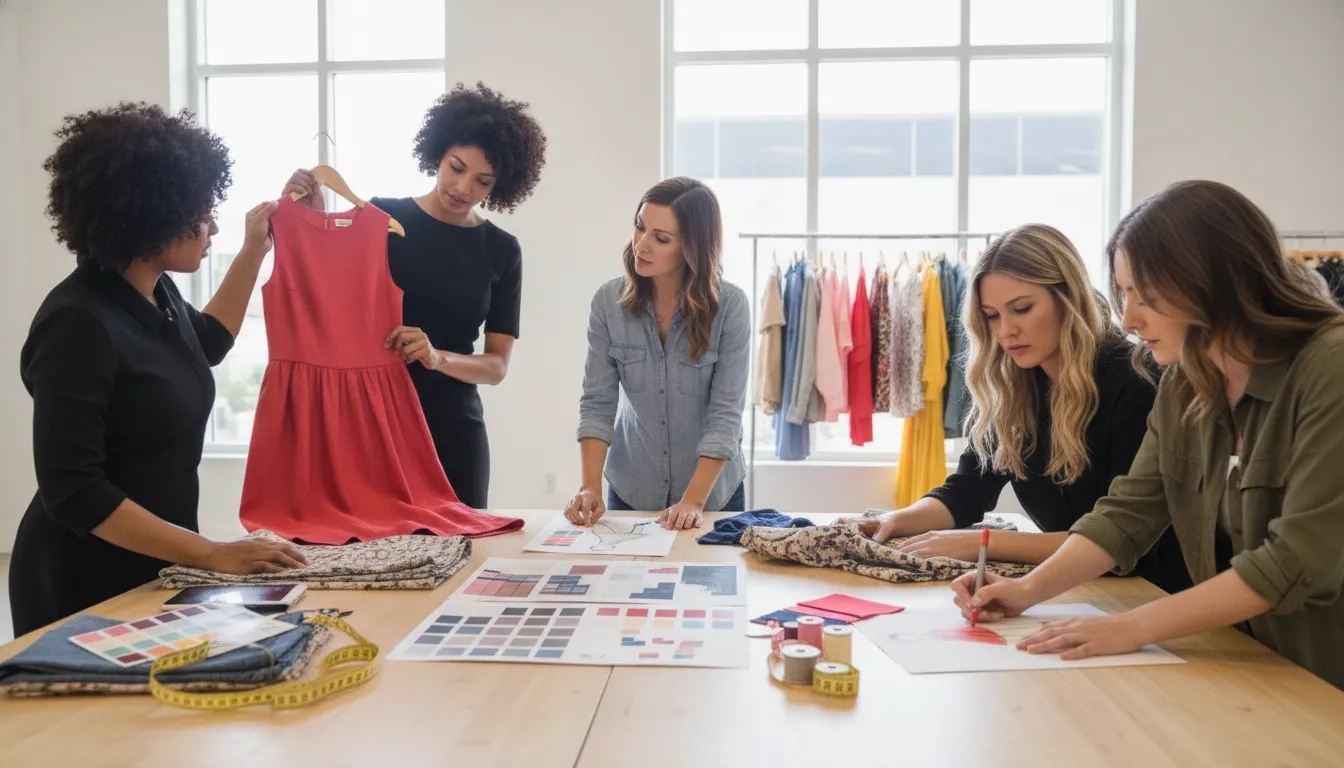
Fashion merchandising connects customer needs with product selection, development, buying, and production. It gives designers, brands, manufacturers, and factory teams a shared way to plan what should be made. It also keeps the commercial goal aligned with what operations can actually deliver.
The work looks different for an independent label, a growing brand, a manufacturer, and a factory. The challenge is similar. Product ideas and demand signals have to become coordinated action. Start by defining the discipline, then decide which workflows your team should own.
What is fashion merchandising?
Fashion merchandising is the operating discipline that turns a creative direction into a product offer customers can actually buy. McKinsey defines merchandising as planning, selecting, distributing, and measuring the success of a product delivered to the end consumer. In practice, it sits between creative direction and commercial constraints. The team protects the intended point of view while deciding customer relevance, product scope, timing, volume, channels, and how results will be judged.
The work follows a sequence, even when a small team compresses several steps into one person. First comes a category or range vision. Then the team shapes an assortment for the customer, channel, and season. Product development turns those choices into workable garments. Buying and allocation decide what is committed and where it should go. In-season management uses sales and stock signals to adjust while the range is live. Each stage changes the next one. An assortment choice affects development, a delivery constraint affects allocation, and live results shape the following season.
The same McKinsey analysis describes a practical standard. Offer appealing products in the right quantity, at the right time, and at the right price. Present them clearly. For an operating team, that standard is a set of decisions, not a job title. Fashion merchandising is where range ambition is tested against demand, cost, and the calendar, then refined with evidence instead of treated as a one-time launch.
What does a fashion merchandiser decide?
A fashion merchandiser turns a collection idea into a commercial plan. The role sits between creative direction, customer demand, sourcing, production, and finance. The Fashion Retail Academy describes the aim simply. Get the right products to the right store, at the right time, in the right quantities. The same work has to connect the design vision with the financial goal.
In practice, decisions often include:
- Assortment: deciding which products, colors, sizes, and styles belong in a category or seasonal range, and how they work together.
- Price architecture: setting a clear relationship between entry, mid, and premium price points so the range serves different customers without becoming confusing or internally competitive.
- Quantities: estimating the depth needed for each product and size, balancing expected demand against the cost and risk of excess stock.
- Timing: coordinating launches, deliveries, replenishment windows, and seasonal changes with production and retail calendars.
- Channel allocation: deciding how much inventory goes to stores, wholesale accounts, ecommerce, or other sales channels.
Those choices are connected. A product may look commercially promising, but its delivery date, minimum order requirements, or margin can change whether it belongs in the range. Likewise, a successful style may need a repeat order for one channel while another channel needs a different color or size mix. Merchandising gives teams a shared view of those trade-offs instead of treating each decision as a separate guess.
Quantity decisions deserve particular care because a buy commits cash before the final sale is known. Review fashion buying and cash flow together. That review shows what a brand can fund, when payments fall due, and how much inventory risk it can carry.
Performance review continues after launch. The merchandiser compares planned and actual sales, sell-through, margin, returns, stock levels, and channel response. That review can lead to reorders, markdowns, transfers, assortment changes, or a decision not to repeat a product. The result is an operating feedback loop: each range supplies evidence for the next set of product, price, quantity, and timing decisions.
How does a seasonal merchandising cycle run?
A seasonal cycle turns a creative direction into coordinated commercial decisions. Merchandising connects customer needs, category priorities, product development, buying, channel timing, and in-season learning without treating any one stage as isolated.
The process works best when each decision leaves useful information for the next team. Designers and brands can use iCreate Pro to organize designs and product information before production, while keeping the commercial intent visible.
- Set the category direction and commercial guardrails. Define the customer, seasonal opportunity, category role, price architecture, margin expectations, and timing constraints before product concepts move forward.
- Shape the assortment without writing a template. Decide which categories, silhouettes, materials, colors, and depth levels support the direction, leaving room for judgment rather than forcing every season into the same grid.
- Connect selected products to development details. Turn promising concepts into workable product information, including specifications, colorways, measurements, materials, supplier details, and manufacturing requirements, following the apparel product development process.
- Turn the plan into buys and factory commitments. Confirm quantities, order timing, supplier capacity, minimums, costs, and production milestones so the assortment becomes an actionable commercial commitment rather than a presentation.
- Allocate by channel and timing. Place units across stores, ecommerce, wholesale, regions, or launch windows according to the customer journey and expected demand, while preserving flexibility for changes.
- Review in-season results and adjust. Compare sales, demand signals, stock position, delivery performance, and margin against the plan, then refine reorders, promotions, transfers, or future buys.
Good merchandising remains active after the initial buy. Teams should revisit commitments as demand and supply conditions change, particularly where delays, cancellations, or weak sell-through could create at-risk fashion inventory.
The cycle is not a straight line from idea to shipment. In-season findings should inform the next category direction, while clear product information helps design, sourcing, manufacturing, and commercial teams act from the same version of the plan.
How does fashion merchandising differ from line planning and inventory?
Fashion merchandising connects customer demand with commercial decisions. It asks which products should reach the market, in what quantities, at which prices, through which channels, and when. Line planning narrows the focus to the collection itself. Inventory management then tracks the units created or purchased as they move through locations and statuses.
| Work | Main question | Typical output | Where it stops |
|---|---|---|---|
| Fashion merchandising | Which products, quantities, prices, channels, and timing should reach the customer? | A commercial plan plus in-season review | Stops before writing the factory specification or counting every unit. |
| Apparel line planning | Which styles belong in the collection and are ready to develop? | A coordinated line informed by the apparel line planning process | Stops before ongoing stock control and detailed sell-through tracking. |
| Fashion inventory management | What units exist by style, color, size, location, and status? | A variant-level stock picture supported by clothing inventory software | Stops before deciding the collection’s commercial direction. |
The boundaries are practical rather than absolute. A merchandiser may use inventory reports to revise a buy, while a line planner may consider price architecture or channel needs. However, each discipline has a different decision horizon. Merchandising coordinates market intent, line planning shapes product assortment, and inventory management maintains operational visibility.
Who should own merchandising work on a small team?
On a small fashion team, designers and brand leaders should own the commercial assortment and product story. They decide which products belong in the line, who each product serves, and how the collection earns a place in the market. Merchandising supports those decisions by connecting creative direction with product details, timing, and partner communication.
Designers and brands own the assortment
The brand should remain accountable for the range, product priorities, and customer-facing meaning behind each item. A designer may lead the product story, while a founder, buyer, or operations lead checks that the assortment fits the business. These roles can share decisions, but ownership should stay close to the brand’s customer knowledge and creative intent.
Manufacturers need visibility into the work
Manufacturers do not need to own the brand’s assortment decisions. They do need a clear view as buys become samples and then move toward production. That visibility helps partners understand project details and handoffs. It does not hand them control of the commercial plan. iCreate Core connects manufacturers with Pro users and tracks project details.
That connection matters when several partners contribute to one product. The brand can retain ownership of the assortment, while manufacturers see the information needed to review requirements, coordinate samples, and prepare the next handoff. A defined workflow also makes responsibility easier to spot when details change or approval is still pending.
Factories own the operational plan
Once approved work reaches the factory, the focus shifts from assortment decisions to execution. Factory leaders need the plan to become a production schedule. Material flow and operational dependencies should be visible. iCreate Power supports connected factory operations, not merchandising software, so it belongs with the team managing production.
The practical boundary is simple: brands own what they are selling, manufacturers coordinate the project handoff, and factories manage how approved work moves through operations. A shared view across those boundaries supports stronger fashion supply chain management without blurring who makes each decision.
What should a team check before the buy is locked?
A buy becomes harder to change once quantities, suppliers, and delivery commitments are in motion. Before approval, bring the commercial story and the practical product details into the same review. The goal is not perfect certainty. It is a clear decision that the team can explain, execute, and revisit.
Use the checklist below with merchandising, design, sourcing, and operations represented. Keep assumptions visible, especially when demand evidence is limited. A useful review separates what the team knows from what it expects, then assigns responsibility for the next decision.
- Confirm the assortment still supports the category story. Check that the styles, colors, materials, and planned roles work together for the customer and channel. Remove gaps, duplicates, or late additions that weaken the intended direction.
- Test prices against cost and the planned margin. Review current product costs, expected selling prices, markdown assumptions, and the margin plan. Do not invent numbers to make an uncertain buy appear commercially complete.
- Ground quantities in a demand view. Tie units to available sales history, customer insight, channel plans, or another stated signal. Record the assumptions behind the forecast, rather than treating enthusiasm as evidence of demand.
- Check that materials and specifications are complete. The factory needs enough information to understand what must be made and how it should be made. A clear tech pack and bill of materials can help expose missing details before commitment.
- Fit delivery dates to the selling window. Compare development, production, freight, launch, and channel deadlines. Flag any dependency that could push arrival beyond the period when the product has a meaningful commercial role.
- Name the owner of the in-season review. Decide who will monitor demand, stock, delivery progress, and margin after the buy. Some teams use fashion ERP software to carry quantities and orders after the merchandising decision, but the ownership still needs a person.
Once these checks are clear, lock the decision with its assumptions and review date. That record gives the team a stronger starting point when market evidence changes.
Frequently asked questions
What is fashion merchandising?
Fashion merchandising is the process of planning, selecting, distributing, and measuring products that reach the end customer. It connects a creative direction with quantities, prices, timing, and channels.
What does a fashion merchandiser do?
A merchandiser decides which products belong in a range, how deep to buy them, when they should arrive, and which channel should receive them. After launch, the same person reviews sell-through and adjusts the next decision.
How does fashion merchandising differ from line planning?
Line planning decides which styles belong in a collection and are ready to develop. Fashion merchandising uses that line, then adds price, quantity, channel, and timing decisions, plus an in-season review.
Is fashion merchandising the same as inventory management?
No. Merchandising decides what should be offered and in what depth. Inventory management tracks the units that exist by style, color, size, location, and status. The two should inform each other, but they are not the same job.
When should a small brand formalize merchandising?
Formalize it when product choices, buys, and factory handoffs no longer fit in one person’s memory. A short written plan for assortment, quantity, price, and review ownership is enough to start.
Put the merchandising plan where the work happens.
A merchandising plan only helps if designers, manufacturers, and factories can see the same product decisions. iCreate connects that work across the garment ecosystem, from product information through project tracking and factory operations.
Contact iCreate to talk through how your merchandising decisions should move from the range plan to the people who make the product.