
Fashion Factory Digital Maturity Model
A fashion factory digital maturity model is a simple way to judge how a garment plant records, shares, and acts on production information. It is not a software shopping list. It asks whether cutting, sewing, quality, and shipping still depend on paper and memory. Or whether the same style, material, and order facts are visible to the people who need them. Factory leaders can use the stages below to name where they are today before they buy another system.
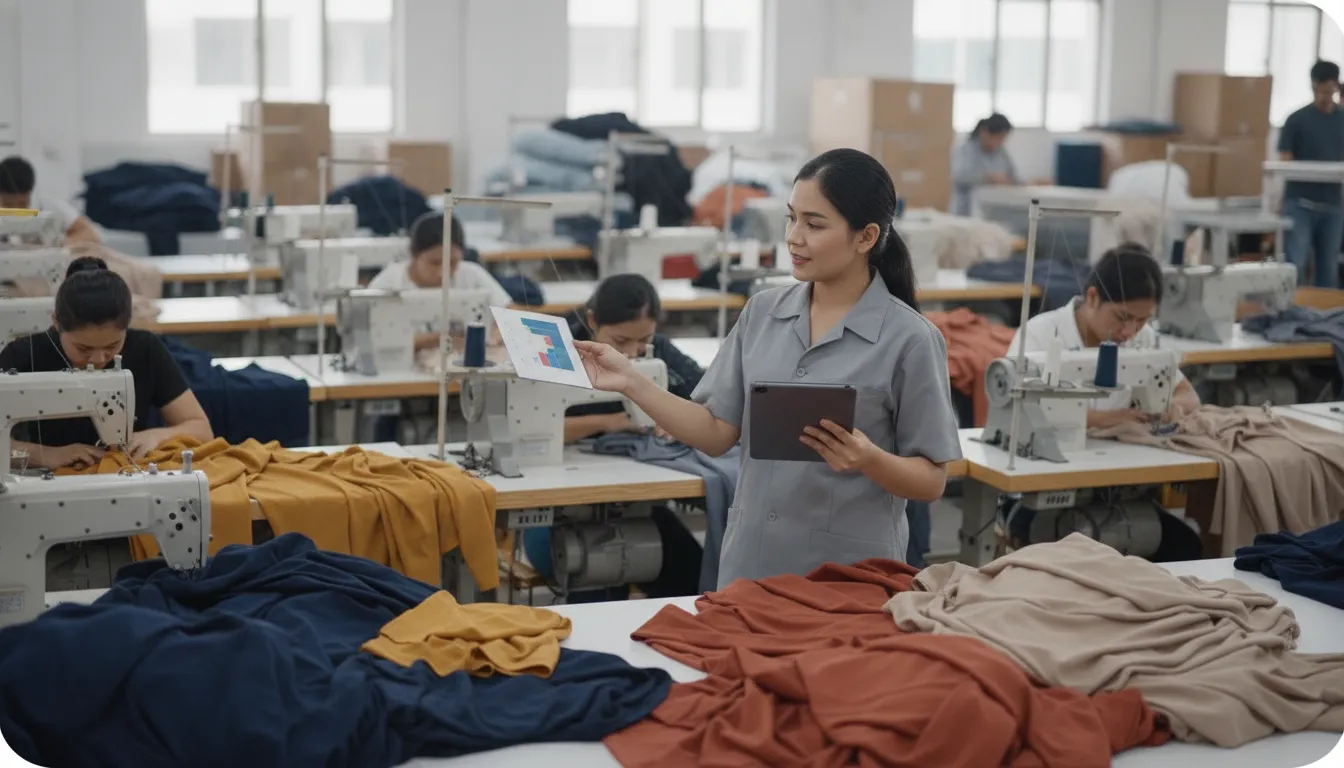
See how iCreate Power supports factory operations
Most plants do not fail because they lack a machine. They fail because a revised measurement, a late trim, or a changed ship date lives in one notebook while the line works from another. A maturity model makes that gap visible. It also keeps a first technology conversation honest: connect the work you already do before you promise prediction, automation, or a new factory operating system.
What a Fashion Factory Digital Maturity Model Measures
Use the model to score how information moves, not how new the equipment looks. A plant can own modern sewing machines and still run orders from WhatsApp threads and end-of-day spreadsheets. Another plant can look ordinary on the floor and still know, by style and line, which bundles are waiting and why.
Researchers who built an Industry 4.0 diagnostic for clothing factories found the same pattern. In a 2022 study in the Journal of Fashion Marketing and Management, Dal Forno, Bataglini, Steffens, and de Souza tested a clothing-factory instrument. They described progress as a ladder: a traditional start, then connectivity, visibility, predictability, and adaptability. Their case factory, which made children’s and adult clothing in Santa Catarina, Brazil, was still at the first level. The lesson for operators is practical. Count how work is recorded before you count robots.
The model in this guide uses five stages that follow that ladder, written for a garment floor:
- Paper and memory. Styles, bundles, and defects live in notebooks, whiteboards, and individual chats.
- Connected records. The same order, style, and material facts exist in a shared system, even if updates are still manual.
- Visible flow. Supervisors can see where a style sits, from cutting through packing, without calling each line.
- Predictable exceptions. The plant can see a late trim, a rising defect, or a capacity clash early enough to change the plan.
- Responsive operations. A change in a spec, a date, or a quantity reaches the people and records that need it without a scavenger hunt.
Stay inside operations. This is not a score for brand marketing, store inventory, or a compliance certificate. A factory can be strong at one stage in sewing and weak in the warehouse. Score the plant by the weakest handoff that still stops an order, not by the best department.
Five Stages and the Evidence to Look For
Walk one live style from the latest confirmed spec to the packed carton. At each handoff, write down what the person uses: a paper traveler, a spreadsheet, a chat photo, or a shared record. The evidence in the table is enough for a first pass. You do not need a consultant to start.
| Stage | What you can rely on | Evidence on the floor | Usual limit |
|---|---|---|---|
| 1. Paper and memory | Experienced people and local notes | Travelers, whiteboards, and end-of-shift verbal updates | A revision or absence breaks the order |
| 2. Connected records | One style, BOM, and order file | Shared spec, material list, and order status that others can open | Status is updated after the work, not during it |
| 3. Visible flow | A current picture of WIP | Line, bundle, and department status that a supervisor can check | People see the delay but still hear about it late |
| 4. Predictable exceptions | Early warning on risk | Defect trends, material shortages, and load clashes flagged before the ship date | The warning still needs a person to act |
| 5. Responsive operations. | A change reaches the work. | Spec, date, or quantity changes show up in the records the line and warehouse use. | Needs clean data from the earlier stages. |
Stage 1 is not a moral failing. Many capable factories still run this way because long-tenured supervisors carry the process. The risk shows up when a second shift, a new buyer, or a revised measurement arrives. If the only complete tech pack is a PDF in one inbox, the plant is still in stage 1 for product information, even if payroll is digital.
Stage 2 begins when product facts survive a person being out. A garment bill of materials that names fabrics, trims, and quantities in one place is a stage 2 artifact. So is a specification sheet the line can open without asking merchandising to resend it. The record can still be typed in by hand. What matters is that cutting, sewing, and packing are no longer guessing from different copies.
Stage 3 is about flow, not storage. A supervisor should be able to answer three questions without a tour: which styles are in cutting, which bundles are blocked, and which finishing load is due today. If the answer requires three phone calls, the records are connected but the flow is not visible. Separate production systems, described in the guide to types of production systems in the garment industry, change how you count that flow. A bundle system and a unit production system do not leave the same clues on the floor.
Stage 4 is where a plant stops being surprised by problems it already had the data to see. Quality sheets that only get reviewed after a buyer rejects a shipment are still stage 3. A weekly defect trend by style and operation is stage 4, because someone can change the method or the load before the carton leaves. Predictable does not mean automatic. It means the exception is visible while there is still time.
Stage 5 is easy to fake with a slogan. Responsive means a changed ship date, a replaced zipper, or a new size breakdown reaches the traveler, the warehouse pick, and the status the buyer sees. If the change lives in a chat and the line still sews the old spec, the plant is not there yet. Automation and advanced routing sit after this stage. They are a poor first project when the spec itself is unstable.
Questions That Place Your Plant
Score the last ten orders, not the best one. Use yes or no. A yes that depends on one hero employee counts as a no, because the plant cannot repeat it on the next shift.
- Can a new supervisor find the current spec, measurement chart, and approved trim list without asking the merchandiser who sent it?
- When a buyer changes a quantity or a date, is there one record the cutting room and the warehouse both use?
- Can you name, by style, how many bundles are waiting in sewing versus finishing right now?
- Do defect totals get reviewed while the style is still on the line, or only after shipment?
- If the industrial engineer is out, can someone else see the latest method notes for that style?
- Does a material shortage appear before the line stops, or only when the operator has nothing to sew?
- Can you trace a packed carton back to the spec version and the line that sewed it?
Four or more no answers on the first three questions usually means stage 1 or early stage 2. The plant’s next gain is a shared record, not a dashboard. No answers that cluster on live status and defects point to stage 3 work: make the flow visible before you try to predict it. No answers that cluster on shortages and late changes point to stage 4 and 5, but only if the earlier records are already trusted.
Keep the review short. Two people from production, one from quality, and one from materials can finish this in a single meeting if they bring one real order with them. Debating a hypothetical style wastes the hour. The order in the building is the test.
What to Fix Before You Buy the Next System
The stage tells you the first project. It does not tell you to freeze. A stage 1 plant that signs a broad factory suite usually recreates its notebooks inside new screens, because nobody agreed what a complete style record contains.
Start with the handoff that creates rework:
- Stage 1 to 2. Put the current spec, BOM, and order quantities in one shared place. Stop the side copies. A manufacturing knowledge habit matters here: the record has an owner, and old versions are marked so the line does not sew from last season’s notes.
- Stage 2 to 3. Record bundle or line status at the few points where work actually waits. Cutting issue, sewing start, finishing, and packing are enough. Extra scans that nobody checks become clutter.
- Stage 3 to 4. Review a short list of exceptions on a fixed rhythm. Defects by operation, trims that will miss the line, and styles that no longer fit the promised date are the usual three. Method work belongs with this stage. The guide to method improvement in the garment industry is about changing how an operation is done, which is wasted if the plant cannot see which operation is slipping.
- Stage 4 to 5. Make one high-cost change travel cleanly. A spec revision or a date change is a good test. If it still takes a group chat to reach the floor, fix that path before you add more software.
Quality records deserve an honest look in this pass. A plant that files inspection sheets but never ties them to a style and operation is collecting paper, not building stage 4. The overview of quality management in manufacturing is useful background, but the maturity test is narrower: can the floor see a rising defect before the buyer does?
Do not treat a maturity stage as a promise of savings, a compliance status, or a go-live date. Those outcomes depend on the products, the buyers, and the data you already trust. The model only tells you which conversation is premature.
Where Factory Software Fits the Stage You Are In
Software should match the stage you can actually use. Apparel manufacturing software is the broad set of tools that carry a style from spec to shipment. Knowing the category is not the same as knowing your stage. A plant at stage 1 needs a reliable product and order record. A plant at stage 3 may need status and warehouse facts in the same picture. A plant at stage 5 may be ready to talk about a wider factory system.
iCreate splits that path by who is doing the work. Designers and brands build the spec in iCreate Pro. Manufacturers that need to receive those specs and track the project without ripping out current routines start with iCreate Core. Factories that are ready to run production information in one place look at iCreate Power, which brings together product lifecycle management, a factory operating view, warehouse management, ERP, and rapid response.
That suite is a stage 3 to stage 5 conversation. It is a poor match for a plant that cannot yet name the current spec. Power is built for factories that want product details, materials, and production tracking together, and that can support the data those screens assume. Core is the closer fit when the immediate job is connecting a manufacturer to the brands and designers sending work. And seeing each project without a full operating-system replacement.
Read the stage before you read a feature list. An ERP buying guide answers a different question: which business system to consider once you know you need one. Implementation planning, including rollout steps, data cleanup, and role training, belongs to the garment factory management software implementation guide. This model stops earlier. It tells you whether you are ready for that project at all.
Two neighboring topics stay outside this page on purpose. A factory automation roadmap is about the sequence of machines, sensors, and routing after the records are trustworthy. Digital product regulations and sustainability rules are about what a buyer or a market asks you to prove. Either can be a reason to mature. Neither replaces the stage check. If your pressure is a buyer asking for clearer chain-of-custody facts, read the fashion supply chain management guide for the wider flow, then come back and score the factory handoffs you control.
Talk with iCreate about your factory stage
Frequently Asked Questions
What is a fashion factory digital maturity model?
It is a stage check for how a garment factory records and shares production information. The stages run from paper and memory to connected records, visible flow, earlier warning on problems, and changes that reach the floor. It judges the information, not the age of the machines.
How many stages should a garment factory use?
Five stages are enough for a first assessment. Fewer, and paper records get lumped together with live line status. More, and the review turns into a software inventory. Score the weakest handoff that still delays an order.
Can a factory skip from spreadsheets to an automated line?
It can buy the tools, but the line will still wait on missing specs, unclear bundles, and late material news. Connectivity and a shared picture of work in process come before prediction or automation. The 2022 clothing-industry diagnostic cited above found a traditional factory still at the first level, which is a common place to start.
Does a maturity score replace an ERP or PLM selection?
No. The score decides timing. A plant that cannot keep one current spec does not yet need a full ERP comparison. A plant that already sees line status and material risk can use the score to brief a factory system conversation. Selection and implementation are separate decisions.
Who should run the assessment?
Production, quality, and materials should score the same live orders together. IT can join, but the answers have to match what the floor does this week. One department grading itself will overstate the stage.
Use the Stage to Choose the Next Conversation
Name the stage from a real order, fix the handoff that creates rework, and only then pick a system. Designers who need to send a cleaner spec start with iCreate Pro. Manufacturers who need project visibility with the brands they already serve start with iCreate Core. Factories that already trust their records and want PLM, warehouse, ERP, and rapid response in one operating picture can review iCreate Power. If you want a second set of eyes on the stage you landed on, contact the iCreate team and bring the order you scored.